When you’re walking through a home you’re thinking about buying, it’s easy to focus on the big things. You check the kitchen appliances, run the faucets, and glance at the water heater. But there’s one hidden system that rarely gets a second thought until it’s too late: the dryer exhaust vent. Protect Property Inspections can help you with that!
If your clothes are taking two or three cycles to dry, your first instinct might be to blame an aging dryer. But out in the field, we find that more often than not, the dryer isn’t broken at all it’s just suffocating.
Understanding how this hidden exhaust run works and where it tends to fail could save you hundreds in utility costs, prevent unexpected repairs, and protect your home from a preventable fire hazard.
The Hidden Costs of a Restricted Dryer Vent
A blocked or restricted dryer vent does way more than just delay laundry day. Here is what is going on behind your walls:
- Shortened Appliance Lifespan: When airflow is choked off, it can create a thermal backpressure inside the drum and exhaust line. This forces the heating element, blower wheel, and motor to work twice as hard at maximum temperature, wearing out your machine up to three times faster than normal.
- Spiking Monthly Energy Costs: Running extra 60-minute drying cycles for every single load of laundry can quietly inflates your electric or gas bill. A clear vent line lets your dryer run efficiently in a single standard cycle.
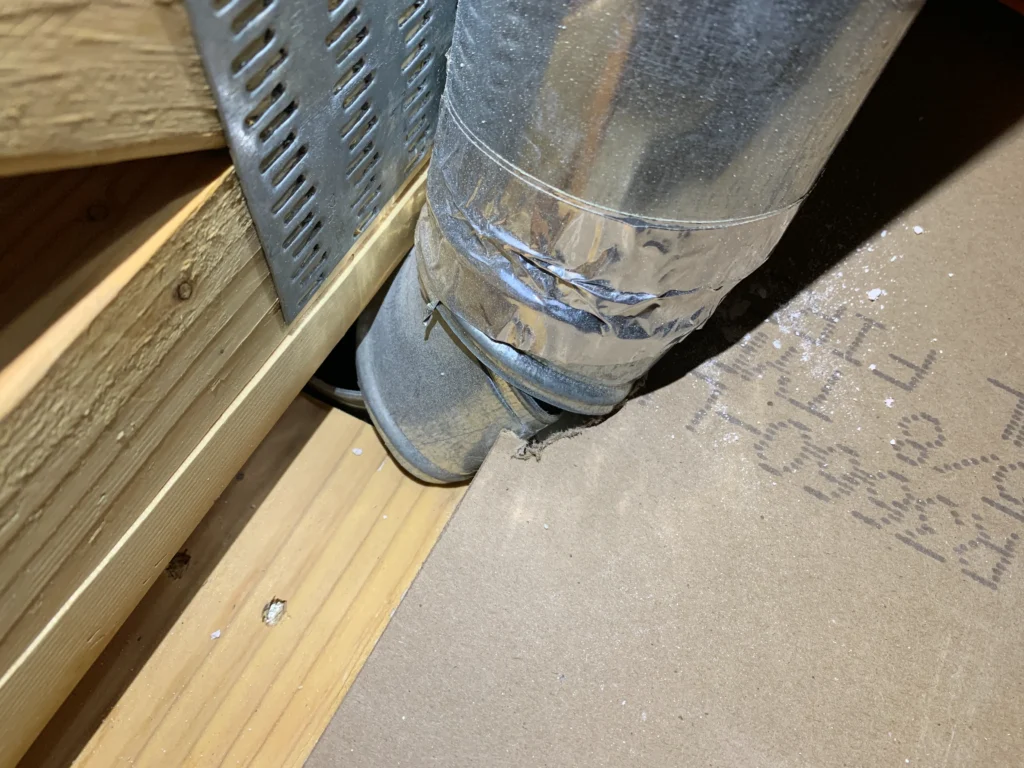
- Hidden Structural & Mold Damage: If a vent duct has separated, cracked, or loosened inside a wall cavity or attic that moisture & air gets pumped straight into your home’s framing. Over time, this trapped humidity could breed hidden mold, rot, and possible costly structural damage.
- Severe Fire Hazards: Trapped lint is basically is a possible fire waiting to happen inside a hot metal pipe. According to national fire safety data, lint buildup is the primary cause of home dryer fires. Without proper airflow to vent that heat safely outside, internal duct temperatures can quickly spike to dangerous ignition levels.
4 Field Cues That Point to Dryer Vent Trouble
Whether you’re walking through a potential new home during a walkthrough or just checking on your current house, here are four major warning signs our inspectors look for:
- Center-Home Laundry Rooms: If the laundry room isn’t located on an exterior wall, that vent pipe must travel anywhere from 10 to 30-plus feet through walls, attics, or ceiling spaces. With multiple 90-degree turns along the route, these long runs are prime targets for heavy lint buildup.
- Moisture “Wet Lint”: Finding damp lint or condensation around the exterior vent hood or behind the dryer means moist air is getting trapped.
- A “Lazy” Exterior Flapper: Head outside while the dryer is running and check the vent flap on the exterior wall or roof. If it’s barely opening, stuck shut, or caked in heavy lint, your exhaust line isn’t breathing properly.
- Outdated Flex Ducting in Walls: Foil or plastic flexible ducting concealed inside walls violates modern building codes because it traps lint easily and melts under high heat.
Why an Internal Camera Inspection Makes the Difference
Here’s the bottom line: you simply can’t evaluate what you can’t see inside a wall or attic space. A standard visual check only covers that short transition duct sitting directly behind your machine.
Our specialized Dryer Vent Camera Scope uses a flexible, high-definition video camera to travel through the length of the hidden ductwork inside your walls. We can spot crushed lines, disconnected joints, sagging pipes, heavy lint buildup and yes, even bird or rodent nests.
Best of all, Protect Property Inspections does not perform repairs, and we do not sell cleaning services. That means our evaluation is objective and unbiased. We provide clear, visual video proof so you have the exact facts keeping you informed & educated.
Frequently Asked Questions About Dryer Vent Scopes
- How often should a dryer vent line be inspected? We recommend inspecting the line prior to purchasing any home new or old. Especially if the laundry room is located in the interior of the house. For current homeowners, an annual check or a scope inspection whenever drying times increase is best practice.
- Can a clogged vent destroy a brand-new dryer? Yes. Installing a high-end, brand-new dryer onto a clogged or restricted exhaust line may quickly burn out the thermal fuse or heating element, and the damage is often not covered under manufacturer warranties.
Don’t Let Hidden Clogs Catch You Off Guard
Before you close on your next property, make sure one of its most frequently used systems is operating safely, efficiently, and up to code.
Are you scheduling a home inspection soon?
Ask our team about adding our Dryer Vent Camera Inspection to your inspection package today!